

SellKit is a funnel builder and checkout optimiser for WooCommerce. It combines sales funnels, a customisable checkout, smart coupons, dynamic discounts, checkout notices and product filtering in one plugin, with the goal of lifting conversion rate and average order value on an existing store.
This review has been updated with SellKit's current version, WordPress compatibility and verified pricing. If you are still deciding which tools your store needs, our roundup of the best WooCommerce plugins puts SellKit in context alongside the alternatives.
SellKit at a glance
Current facts from the WordPress.org plugin directory, checked at the time of writing:
- Version: 2.7.0
- Last updated: 19 September 2026 — actively maintained
- Active installations: around 7,000
- Tested up to: WordPress 6.9.8
- Requires WordPress: 5.6 or later
- Requires PHP: 7.0 or later
- Rating: 98% (156 reviews — 143 five-star, 9 four-star, 1 three-star, 3 one-star)
- First published: 9 February 2022
- Developer: Artbees, the team behind the Jupiter X theme
A 98% rating across 156 reviews is a strong signal, and an update within the last week shows the plugin is under active development. The one figure to weigh is the install base: at roughly 7,000 active installations SellKit is considerably smaller than the best-known funnel plugins, which matters mainly for the availability of third-party tutorials and community answers rather than for the quality of the plugin itself.
What SellKit does
SellKit targets the part of a WooCommerce store where revenue actually leaks: the path from product page to completed order. Its feature set breaks into five areas.
- Sales funnel builder — multi-step funnels with one-click upsells, downsells and order bumps.
- Checkout optimisation — a customisable, condensed checkout with express checkout, inline validation and field control.
- Smart coupons and dynamic discounts — conditional offers that apply automatically based on customer behaviour or cart contents.
- Checkout notices — targeted messages on cart and checkout pages.
- Product filters and variation swatches — faster catalogue browsing and colour or image swatches instead of dropdowns.
Optimising the WooCommerce checkout
The default WooCommerce checkout is functional but generic, and every unnecessary field or extra step costs conversions. This is the strongest part of SellKit.

You can reduce the number of steps in the checkout process, customise the form layout and remove fields you do not need. Express Checkout lets a customer skip the cart page entirely. Inline form validation surfaces errors as the customer types rather than after a failed submission, which is the single cheapest checkout improvement most stores can make. Auto-complete and pre-populated fields cut typing for returning customers.
One accessibility caveat if you customise the checkout heavily: keep every field's visible label, and do not rely on placeholder text alone. Placeholders vanish as soon as someone starts typing and frequently fail colour contrast requirements.
Getting started
Install the free version from the WordPress.org directory the usual way — Plugins → Add New, search for SellKit, then install and activate. You do not need to download a zip and upload it manually unless you are installing a premium licence.
After activation a SellKit item appears in the admin menu. Its dashboard shows stats for Funnel Builders, Smart Coupons, Dynamic Discounts and Smart Notices — all empty until you create something.
Creating a sales funnel
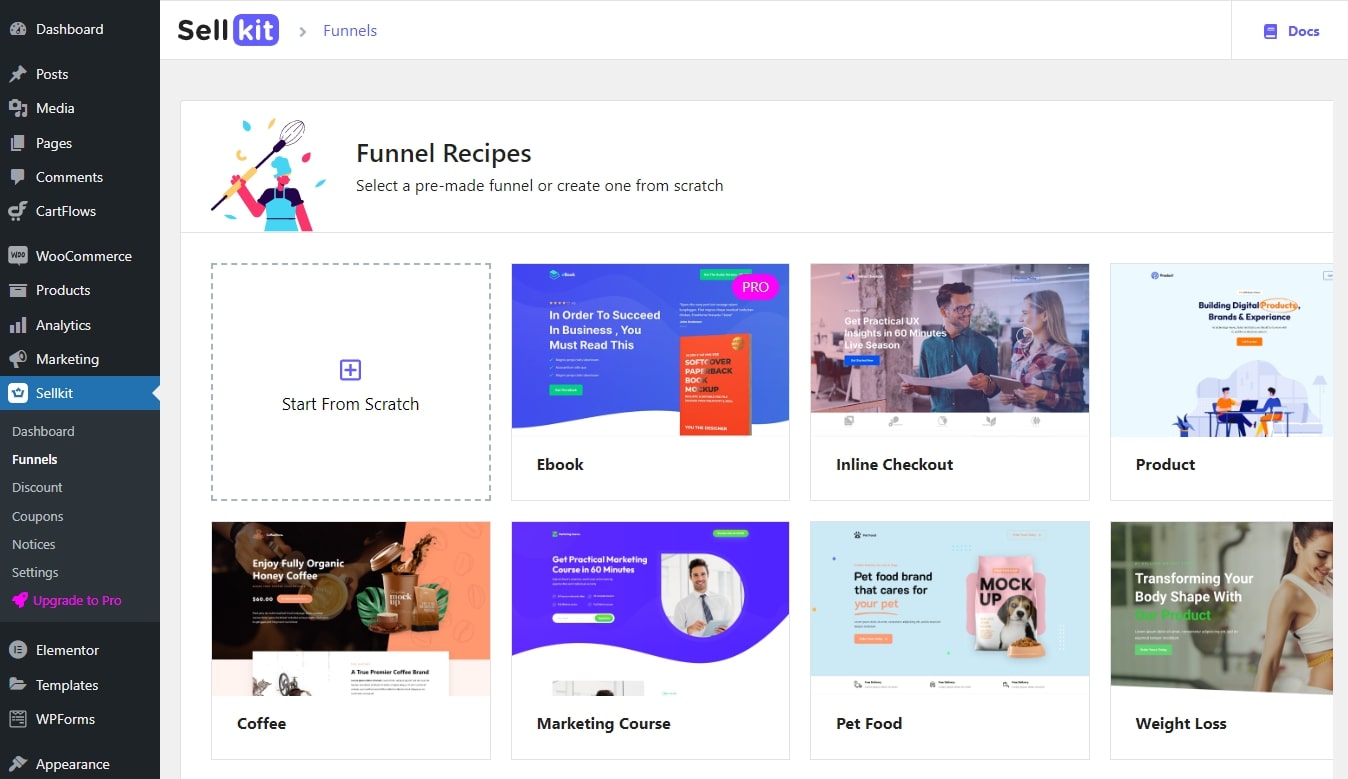
Choose the funnel menu and you are offered a set of ready-made templates for common scenarios such as an ebook, a single product, or a course. Pick the closest one rather than starting from a blank canvas.
Selecting a template shows its steps — typically a landing page, a checkout and a thank-you page — and a Preview button so you can see the flow before committing. Appearance is adjustable, so funnel pages can be made to match your existing branding.
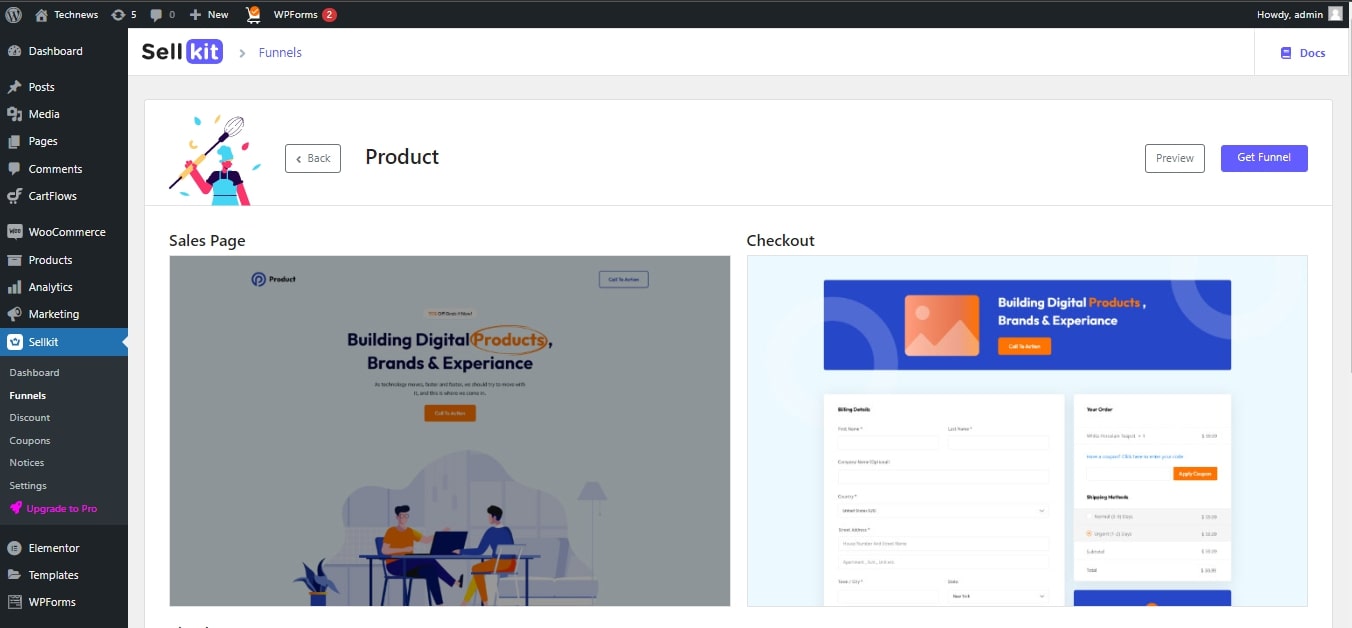
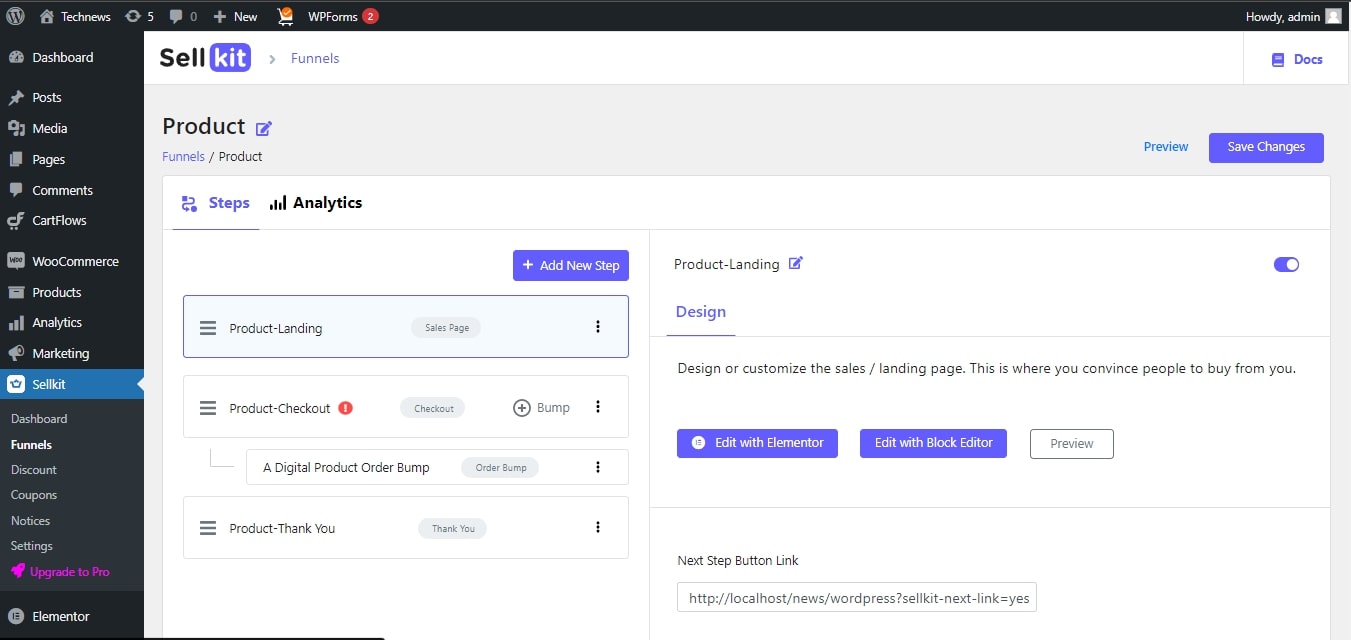
Click Get Funnel to import the template, after which each step is editable individually.
Discounts, coupons and notices
Most stores run discounts without knowing which ones actually influence behaviour. SellKit's approach is conditional: offers trigger on customer or cart attributes rather than being permanently available to everyone.
You could, for instance, create a dynamic discount that applies only to visitors on a mobile device, or only to customers who have registered, or one that rewards repeat purchases.
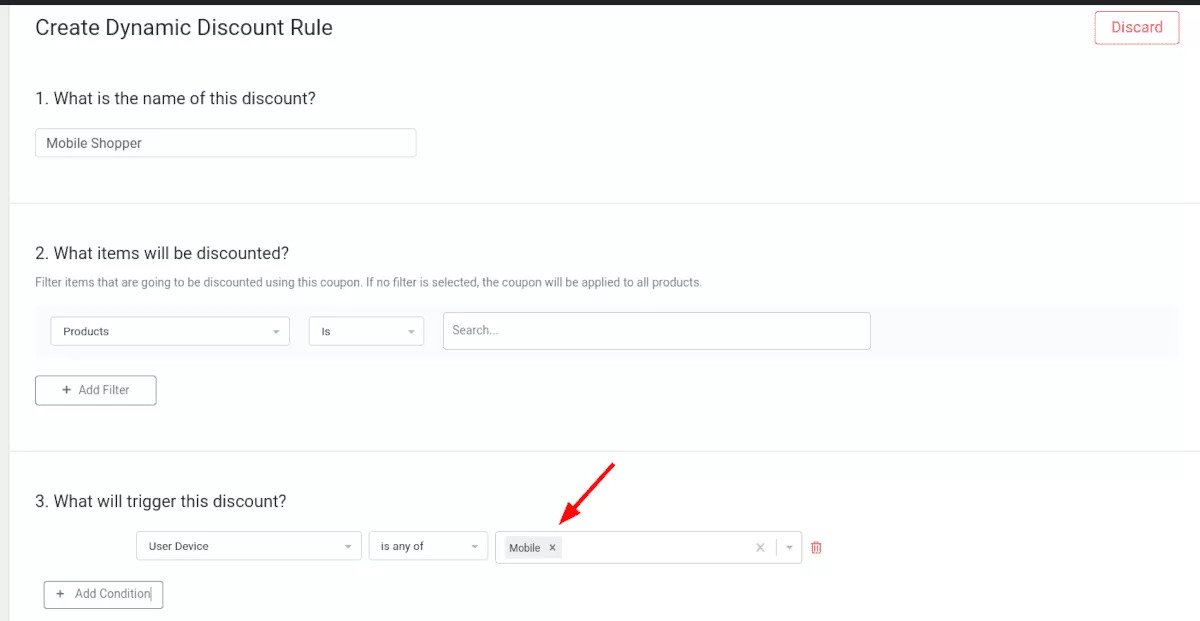
Smart Coupons are dynamic offers with their own conditions, which can be scoped to a single product or applied at cart level based on attributes such as a previous order's billing city.
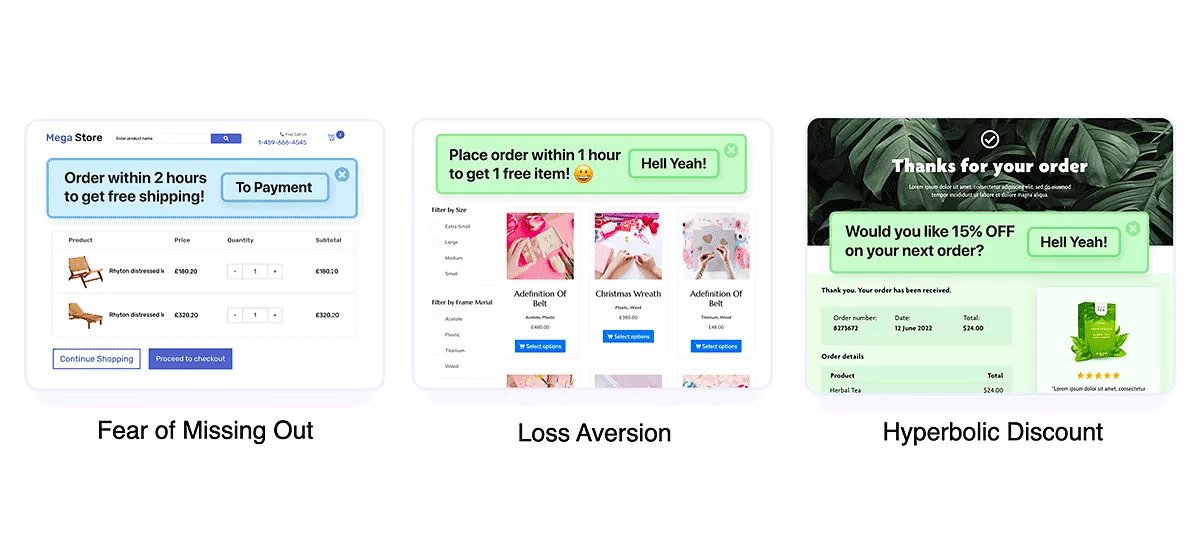
Checkout Notices place personalised messages on the cart and checkout pages — free-shipping thresholds, stock levels, or a reminder of what is in the cart. Used well, these lift average order value; used badly they become noise, so keep them few and specific.
Integrations
- Elementor — for building and styling funnel pages
- Google Analytics
- Facebook Pixel
- WooCommerce payment gateways
The Elementor dependency is the one to check before you buy: SellKit's funnel page building is built around Elementor, so if your site uses a block theme and the site editor exclusively, confirm the current requirements with the vendor before committing.
SellKit pricing
There is a free version on WordPress.org. Premium pricing from the vendor's pricing page at the time of writing, with the discounted figures they currently advertise:
| Plan | Price | Sites |
|---|---|---|
| Standard | $59/year | 1 website |
| Pro | $99/year (listed down from $199) | Unlimited |
| Lifetime Access | $299 one-off (listed down from $599) | Unlimited |
All three tiers list the same headline feature set — Smart Coupons, Dynamic Discounts, Smart Notices, Variation Swatches, Product Filters, Advanced Segmentation and premium pre-made templates — so the practical difference is site count and the licence term rather than functionality. There is a 30-day money-back guarantee.
Note that the promotional prices above are what the vendor is advertising now, and promotional pricing changes. Check the current figures on the pricing page before you budget, and treat the crossed-out "regular" prices as the renewal risk. The unlimited-site Pro tier at $99 is unusually generous for this category if you run more than one store; the lifetime option is only worth it if you are confident about the plugin's long-term maintenance, and a 7,000-install plugin is a smaller bet than a market leader.
Our verdict
SellKit is a credible, actively maintained option for optimising a WooCommerce store, and the checkout work is its strongest suit. The ratings are excellent, the release cadence is current, and the unlimited-site pricing is competitive.
It suits you if you run one or more WooCommerce stores, already use Elementor, and want checkout optimisation, funnels and conditional discounting from a single plugin rather than assembling three.
Look elsewhere if you need the largest possible ecosystem of tutorials and integrations, or if your site is block-theme-only and you would rather not introduce Elementor. Start with the free version to confirm it fits your store before paying.
Frequently asked questions
Is SellKit free?
There is a free version in the WordPress.org plugin directory, which is the sensible place to start. Premium unlocks the full feature set across more sites.
Is SellKit still actively maintained?
Yes. At the time of writing it is on version 2.7.0, was last updated on 19 September 2026, is tested up to WordPress 6.9.8 and holds a 98% rating from 156 reviews, with around 7,000 active installations. It is developed by Artbees, the team behind the Jupiter X theme.
How much does SellKit cost?
The vendor currently lists Standard at $59/year for one site, Pro at $99/year (down from $199) for unlimited sites, and Lifetime Access at $299 one-off (down from $599) for unlimited sites, with a 30-day money-back guarantee. All three list the same headline features, so you are mostly buying site count and licence term. Promotional pricing changes, so check the pricing page before budgeting.
Does SellKit require Elementor?
SellKit's funnel page building is built around Elementor, which is listed as its primary integration. If your site is block-theme-only and you would rather not add Elementor, confirm the current requirements with the vendor before you buy — this is the compatibility question most likely to catch you out.
How does SellKit compare with CartFlows or FunnelKit?
SellKit competes on breadth and price, bundling funnels, checkout optimisation, smart coupons, dynamic discounts, notices and product filtering in one plugin with an unlimited-site tier at $99/year. The vendor publishes its own comparison table, which is naturally favourable to itself. The genuine trade-off is ecosystem size: at roughly 7,000 active installs SellKit is much smaller than the best-known funnel plugins, so there are fewer third-party tutorials and community answers.
Responses (1 )